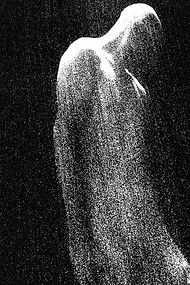
THE STATES OF THE BODY
The diversity of the body is more visible today than at any time in the one hundred and eighty years of photography's history. Whatever the skin color, age, whether angular or flourishing, healthy or sick, the body has become a globalized object, a fact that is reflected in the constantly changing social standards of beauty. The ongoing rethinking of notions of identity, and gender and identity in particular, catalyzes real change within society: the body, and the self preserved within it, can now more openly display its own ambiguity. Contemporary photography reflects this trend, showing us the body from every angle and opening new avenues for bodily representations and new perspectives that transcend nudity. It already happens in the case of the female nude, which has always been dominant in photography, and subject to reification...
Between the two extremes we find visual representations: those of other bodies, real or fictitious, which we often admire, and ours, which often disappoints us.The tyranny of appearance begins very early, at a very young age, and is gradually strengthened by images that obey the hegemonic norms and ideals of the society we live in, through those perfectly photographed bodies reproduced in magazines and on the internet, and which make us increasingly insecure about our own.Defining the identities of a body has become an extremely common concern, and even as images of perfect bodies continue to proliferate, there is an ever-growing desire to know something other than the ideal we should theoretically approach.
We humans constantly rethink the body.
And that's why it seemed important to us to point out some ways in which it can be viewed, in an effort to show the dialogue we have with our own bodies.
The “Physical”, highlights how life is first and foremost and always corporeal.
We are our body.
We are creatures of flesh and bones, governed by the laws of anatomy and physiology. We cannot escape this fate even if, in the virtual age, we feel increasingly disconnected from our flesh.
The body is the seat of our presence in the world.
Photography divides the body into elements, examines its complex technology, explores its organs and functions in depth, as well as its shortcomings and suffering.
The images produced to document and understand the body allow researchers to build an atlas of the 21st-century human being, …
The “ Alter ego”, concerns the theatrical aspects of the body. It carries us, but we carry it too.
And like a stage where our dreams and goals, games, joys, impulses, emotions, problems and sadness, in short everything has a role.
It is not possible to escape the reflection of his mirror, in the same way in
which it is now impossible to escape from smartphone screens.
Digital photography encourages us to play and experiment with poses and identities
different, based on our own image.
Our phones have transformed us into potential photographers and, above all, into large consumers and image disseminators. In our narcissistic society, selfies, shared primarily on social networks, are taken everywhere, and by people of all ages.
In previous eras the self-portrait was reserved for artists.
Today anyone, ordinary and celebrated people, practices this ritual, in which the body is shown as a posed version of one's self.
Existence is first and foremost corporeal.
The “Flesh” cares about reality.
What makes the body so singular is precisely its vulnerability.
Is exposed to fatigue, suffering and illness.
We have not yet found a way to eliminate death or abolish old age.
The average lifespan in the 21st century has lengthened, and despite all our efforts to hide or beautify, we are sometimes faced with the reality of a disfigured body.
The natural body, the one that shows the signs of life, is often not easy to look at.
We are offended by images of sick or suffering bodies. We don't feel like ourcomfortable with meat and its imperfections because we are used to imagesretouched. And as a reaction to the best-edited images we are constantly exposed to, contemporary photographers help us embark on a journey toward accepting our fragility, which is then the hallmark of our humanity.The examination concludes with l’ ”love”, which observes the body in terms of reactions, emotions, sensations and pleasure.Sex is one of the most exploited subjects in photography, treated with veneration, orin the form of provocation.Images «obscene» were already circulating in the 19th century.
Today, in the age of the internet, images of physical ’«love» are spread in an unprecedented amount and, above all, are accessible to everyone. These images of bodies, generally shown naked, offered to the viewer's gaze, often seem seductive and exciting.Photography becomes a vector of desire.However, these photos not only express sexuality, but also celebrate true love through the language of bodies that touch and care for each other.Shared intimacy with other human beings also offers photographers the opportunity to portray the body in terms of emotions.But, focused as it is on the physicality of the body, can photography be able to illuminate the mind?
The discussion is still open, yet modern science reveals with increasing certainty that our thoughts, emotions, and behaviors are equally physical, as well as mental and rational, processes.The human body, both intimate and universal, is one of the main subjectsof Western art history. It expresses both the divinity and the wounds of ’humanity.of such object in photography.The concept of the body is such a broad topic that it could be discussed endlessly. The way the body is represented in photography, now that photography has become the most important contemporary medium, brings us back to the great open questions of our society.
Photography is never neutral, and always raises the question of what it means to be human today.The body has been observed in terms of self-heroification, stereotypes, aspirations,...